1
Examination and diagnosis
The tooth is examined and X-rays are taken to assess the roots, surrounding bone and extent of infection.
Endodontic treatment that removes infection inside a tooth, relieves symptoms and preserves your natural tooth wherever this is clinically possible.
Severe toothache, sensitivity to heat or cold, swelling or pain when biting may be signs that the soft tissue inside a tooth has become inflamed or infected. Root canal treatment is designed to remove the infection, relieve symptoms and preserve the natural tooth whenever this is clinically possible. At Luxi Dent Center in Antalya, root canal treatment is planned according to the condition of the tooth, the extent of infection and the restoration it may need afterwards.
Root canal treatment, also known as endodontic treatment, is a procedure used to treat inflammation or infection inside a tooth. The centre of the tooth contains soft tissue called the pulp, which includes nerves and blood vessels. When the pulp becomes infected or severely inflamed, it cannot usually heal on its own. During treatment, the infected tissue is removed, the inside of the tooth is cleaned and disinfected, and the root canals are filled and sealed to reduce the risk of reinfection. The goal is not to remove the tooth, but to preserve it so that it can continue to function as part of your natural bite.
Symptoms vary, and some infected teeth cause little or no discomfort, so a dental examination and X-ray are needed for diagnosis. Possible warning signs include persistent or severe toothache, pain when biting or chewing, lingering sensitivity to hot or cold, swelling of the gum or face, a small pimple-like swelling on the gum, darkening or discolouration of the tooth, and a cracked, broken or deeply decayed tooth. Pain may sometimes reduce when the nerve tissue dies, but the infection can remain and spread into the surrounding bone, so the absence of severe pain does not always mean the tooth is healthy. The pulp can become damaged when bacteria enter the tooth or when the tooth experiences significant trauma, with common causes including deep tooth decay, a leaking or very large filling, a cracked or fractured tooth, repeated dental procedures on the same tooth, trauma even when no visible fracture is present, and advanced wear that exposes or irritates the pulp. Treating the cause early may improve the chance of saving the tooth and can help prevent the infection from affecting the surrounding tissues.
Root canal treatment and tooth extraction can both remove infection, but they lead to different outcomes. Root canal treatment aims to preserve the natural tooth, which may then need a filling or crown, retains natural tooth structure to support a normal bite once restored, and focuses treatment planning on infection control and restoration. Extraction removes the tooth, after which the gap may need an implant, bridge or denture, so function depends on replacement planning and the plan includes both the extraction and possible tooth replacement. When a tooth can be restored predictably, preserving it may help maintain natural chewing function and avoid the need for a replacement, while extraction may still be appropriate when the tooth has a poor long-term prognosis.
Many root canal treatments can be completed in one appointment, while more complex infections, retreatment cases or teeth with multiple canals may require two or more visits. Examination and X-rays are carried out at the first appointment, root canal cleaning and filling may take one or more appointments, the permanent filling or crown may be placed at the same visit or a later one, and any review is scheduled according to the clinical plan. For international patients, the schedule depends on whether the tooth requires only root canal treatment or also needs a laboratory-made crown, and a preliminary review of your X-ray can help estimate the required number of visits before you travel.
Not every root canal-treated tooth requires a crown, but many back teeth and structurally weakened teeth benefit from additional coverage after treatment. The recommendation depends on how much healthy tooth structure remains, the location of the tooth, existing fillings, cracks and bite forces: a front tooth with minimal structural loss may need only a suitable filling, while a heavily restored molar may require a crown to reduce the risk of fracture. The final restoration is an important part of the treatment, because even a well-treated root canal can fail if the tooth is not sealed and protected appropriately afterwards. The tooth and surrounding tissues may feel tender for a few days after treatment, especially if there was significant inflammation before the procedure, and this discomfort is usually manageable with the medication recommended by the dentist. Afterwards it is advisable to avoid chewing hard foods on the tooth until the permanent restoration is completed, maintain normal brushing and interdental cleaning, follow any medication instructions provided by the dentist, return for the final filling or crown within the recommended timeframe, and contact the clinic if swelling or severe pain occurs or symptoms worsen. A root canal-treated tooth no longer contains living pulp, but it still requires routine cleaning and professional dental reviews like any other tooth.
The cost of root canal treatment depends on the type of tooth, the number and complexity of the canals, whether the tooth has been treated before, and whether a filling, post or crown is required afterwards. A front tooth generally has fewer canals than a molar, while retreatment can require additional time and specialist techniques, so the final cost should be based on examination and imaging rather than on one fixed price for every tooth. After reviewing your X-ray, Luxi Dent Center can prepare a preliminary treatment outline and itemised quote, with the final plan confirmed after clinical examination. An online review of a recent X-ray may also help the clinical team estimate whether root canal treatment is likely to be required and whether a crown may also be needed, although the final diagnosis is made after examination in Antalya. Straightforward cases may fit within a short stay, while complex infections, retreatment or laboratory restorations may require additional appointments, so travel dates should be arranged around the preliminary treatment schedule rather than assuming every case can be completed in one visit. After returning home, routine check-ups should continue with your local dentist, and if symptoms return or the restoration feels damaged you should seek dental care promptly.
The tooth is examined and X-rays are taken to assess the roots, surrounding bone and extent of infection.
The area is numbed and the tooth is isolated to keep it clean and dry during treatment.
An opening is created in the tooth, infected pulp is removed and the canals are shaped, cleaned and disinfected.
The canals are filled with a biocompatible material and sealed to reduce the risk of bacteria re-entering.
The access opening is restored, and depending on the tooth a temporary filling may be used until a permanent filling or crown is placed.
The bite and symptoms are checked, and back teeth or structurally weakened teeth may require a crown for additional protection.
The procedure is performed under local anaesthesia, so patients generally do not feel pain during treatment. Tenderness for a few days afterwards may occur, particularly when the tooth was already inflamed.
The appointment length depends on the tooth and the number of canals. Many cases are completed in one visit, while complex infections or retreatment may require additional appointments.
Antibiotics may help control spreading infection in selected situations, but they do not remove infected tissue from inside the tooth. Definitive dental treatment is still required to resolve the infection, and delaying it can allow the infection to spread.
The infection may continue to damage the tooth and surrounding bone. Symptoms may worsen, and the chance of saving the tooth can decrease.
Some teeth may change colour after trauma or root canal treatment. Where this occurs, whitening, bonding, a veneer or a crown may be considered depending on the tooth.
Yes. Reinfection can occur if canals are missed, the seal breaks down, a restoration leaks or the tooth fractures. Retreatment or endodontic surgery may sometimes be considered.
Many patients can travel after treatment, but the timing should be based on symptoms, the extent of infection and whether further appointments are required.
A crown may be recommended for back teeth or teeth with significant structural loss. The decision depends on the tooth's condition and bite forces.
Communication, appointment planning and process follow-up are provided in Turkish, English, German and Russian. We also share guidance on airport–hotel–clinic transfers and accommodation.
A preliminary assessment can be made from your dental photos and panoramic X-ray if available; the definitive treatment plan is finalized after a clinical examination.
The duration varies by procedure type and individual case; a personalized treatment and accommodation schedule is shared during the initial consultation.
Let's build your personalized treatment plan together with our expert team.
Other Treatments
Explore other treatments that may be right for you.
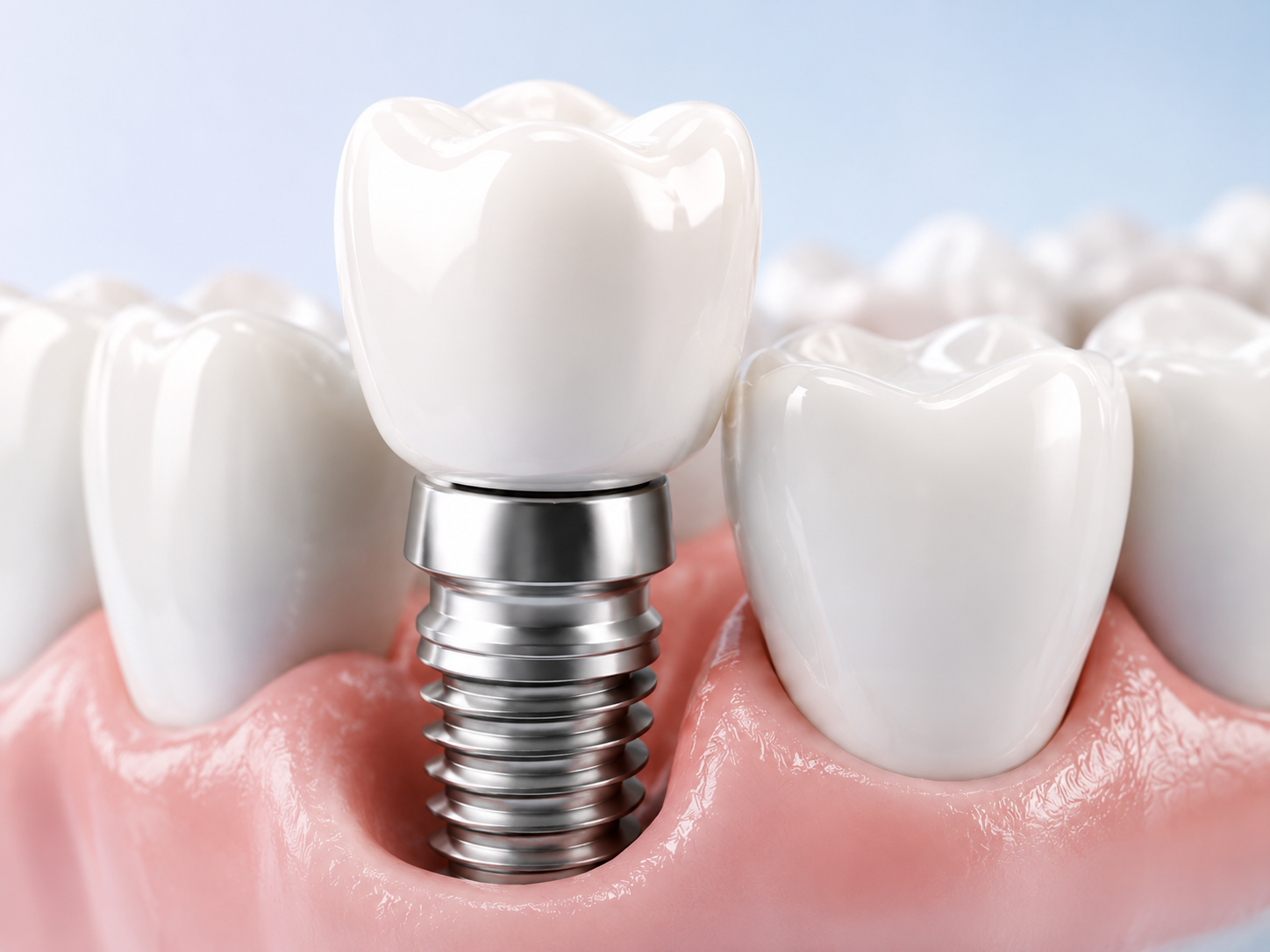 Implantology
Titanium implants that replace both the tooth and its root, helping restore natural chewing while supporting the surrounding jawbone.
View details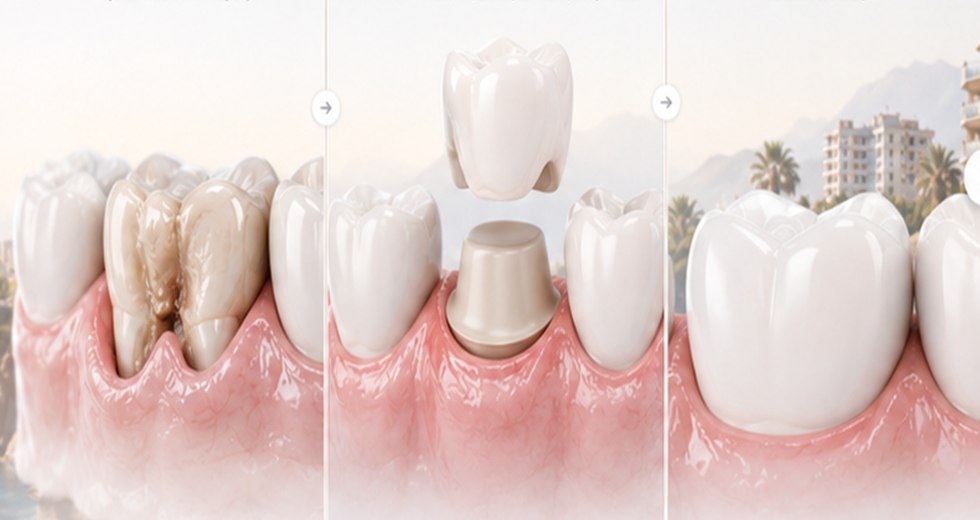 Aesthetic Dentistry
Custom-made zirconia crowns that cover, protect and restore damaged, worn or discoloured teeth while blending with your natural smile.
View details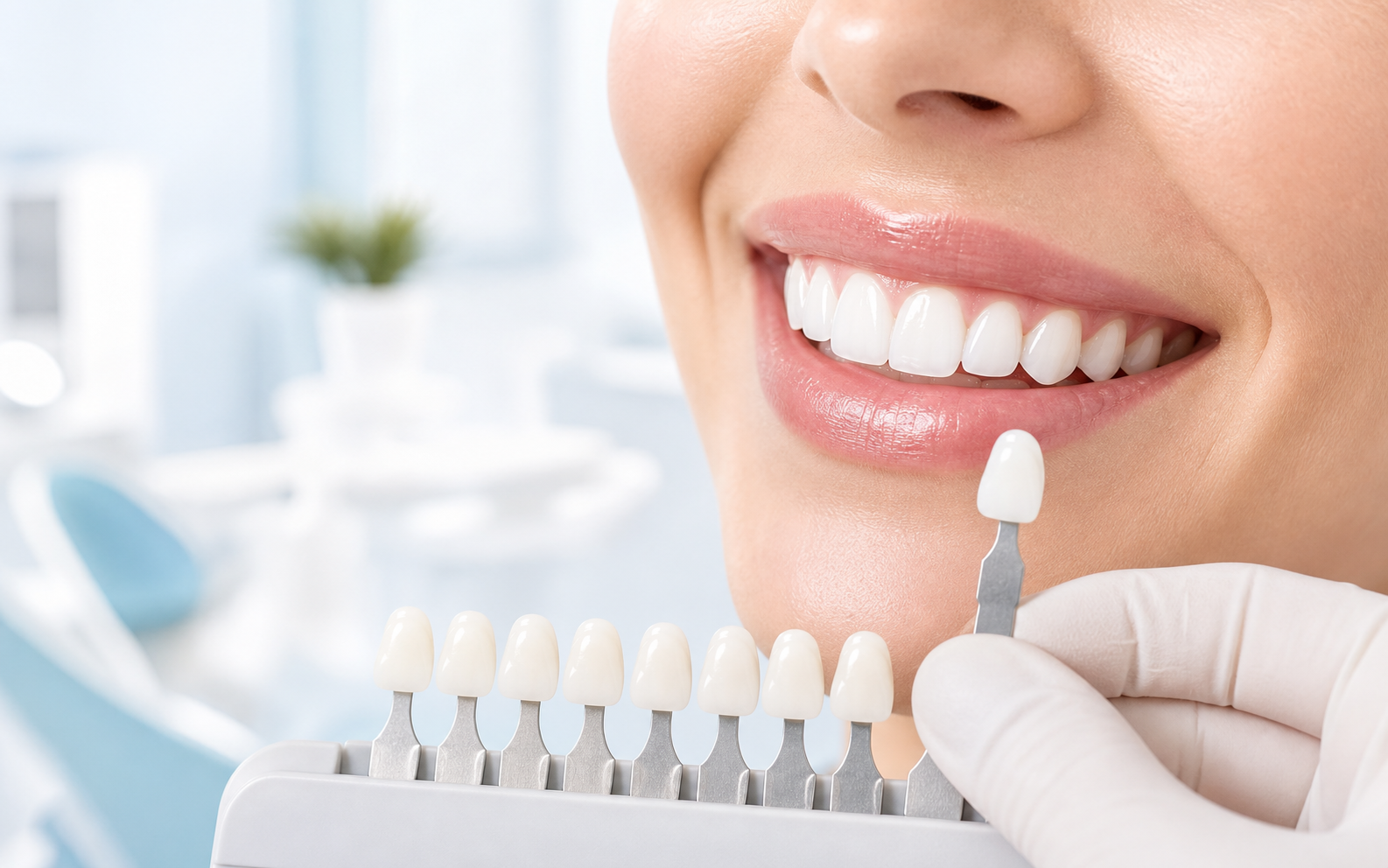 Aesthetic Dentistry
Thin, custom-made ceramic veneers that refine the colour, shape and symmetry of the front teeth while preserving healthy tooth structure.
View details