1
Initial Information
The family shares the child's age, symptoms, medical history and any previous dental experiences.
Gentle preventive and restorative care for infants, children and adolescents, protecting developing teeth and building confidence at the dentist.
Children's dental care is not only about treating cavities. It also helps protect developing teeth, monitor jaw growth, prevent future problems and build habits that can influence oral health for life. Pediatric dentistry, also called paediatric dentistry or pedodontics, focuses on the oral health of infants, children and adolescents, and considers how baby teeth, permanent teeth, jaw growth and behaviour change throughout childhood. At Luxi Dent Center in Antalya, care is planned around the child's age, dental development, medical history and comfort level, with the aim of preventing disease where possible, treating problems early and helping children feel safe in the dental environment.
Baby teeth eventually fall out, but they still play several important roles: they help children chew, speak clearly and maintain space for the permanent teeth developing underneath. Untreated decay in a baby tooth can cause pain, infection, sleep disturbance and difficulty eating, and in some cases it may also affect the surrounding tissues or the developing permanent tooth. For this reason, baby teeth should be assessed and treated according to their condition rather than ignored because they will eventually be replaced.
Pediatric dental care can address tooth decay in baby or permanent teeth, toothache, swelling or dental infection, enamel defects or weak tooth surfaces, early loss of a baby tooth, delayed or unusual tooth eruption, dental injuries caused by falls or sports, crowding, bite problems or jaw growth concerns, and dental anxiety or difficulty cooperating during treatment. Some issues can be managed during a routine appointment, while others may require imaging, follow-up visits or referral for orthodontic or specialist care.
Preventive care aims to reduce the risk of decay and identify problems before they become painful or complex. Regular check-ups examine the teeth, gums and development so that early decay and eruption concerns can be detected. Fluoride treatment applies a concentrated fluoride product to the teeth and may help strengthen enamel and reduce decay risk, while fissure sealants place a thin protective coating in the deep grooves of the back teeth to reduce food and bacteria collecting in vulnerable areas. Oral hygiene guidance provides age-appropriate brushing and interdental advice, and diet counselling reviews sugary snacks, drinks and feeding habits to help reduce repeated acid attacks on the teeth. When a sealant is placed, the tooth is cleaned, prepared and coated with the sealant material, which is then hardened; the procedure is generally quick and often does not require drilling or local anaesthesia, although sealants should still be checked during routine appointments because they can wear or chip over time.
When treatment is required, the approach depends on whether the tooth is a baby tooth or a permanent tooth, how close the decay is to the nerve and how long the tooth is expected to remain in the mouth. Care may include tooth-coloured fillings for cavities that can be restored conservatively, pulp therapy for baby teeth with deeper decay or inflammation, root canal treatment for selected permanent teeth, stainless steel or other pediatric crowns for heavily damaged baby teeth, extraction when a tooth cannot be restored or infection cannot be controlled, space maintainers when a baby tooth is lost earlier than expected, and treatment and monitoring after dental trauma. A routine examination or preventive appointment may be completed in a short visit, while fillings, pulp treatment, extractions or trauma care may require longer appointments or more than one visit. Treatment may be divided into manageable sessions to support cooperation and reduce fatigue, depending on the number of teeth involved, the child's comfort level and whether urgent pain or infection is present.
A child's behaviour during dental treatment can be influenced by age, previous experiences, pain, communication style and the length of the appointment, and the goal is to build trust rather than rush the child into treatment. Depending on the child, the dental team may use simple explanations, tell-show-do techniques, short appointments and gradual familiarisation. Parents can help by using calm, neutral language and avoiding frightening words or stories before the visit. Some children with severe anxiety, complex treatment needs or additional healthcare requirements may require advanced behaviour-management support or referral for sedation services, depending on what is clinically appropriate and available.
After a filling, extraction or pulp treatment, temporary numbness or mild tenderness may occur, and parents should supervise eating until the anaesthetic has worn off to reduce the risk of the child biting the lip or cheek. At home, it helps to follow the dentist's instructions for brushing and any prescribed medication, offer soft foods if the area feels tender, avoid very hot foods while the mouth is numb, watch for persistent swelling, fever, severe pain or bleeding, and return for follow-up and preventive appointments as recommended. The price of care depends on the type of appointment, the number of teeth involved, whether X-rays are needed and whether the child requires preventive care, a filling, pulp treatment, extraction or another procedure, so a clear quote should be based on examination and the recommended care rather than one standard package. Families visiting Antalya may arrange an initial assessment before travel by sharing the child's age, symptoms and available records, although final diagnosis and cooperation can only be assessed during the in-person appointment. Preventive care and straightforward treatments may fit into a short stay, while multiple cavities, dental infection or behaviour-management needs may require several appointments, so an overly tight travel schedule is best avoided; for children who live abroad, copies of treatment records and X-rays should be kept so the local family dentist can continue routine care.
The family shares the child's age, symptoms, medical history and any previous dental experiences.
The dentist checks the teeth, gums, bite and dental development, and X-rays are taken only when clinically needed.
Findings and treatment options are discussed with the parent or guardian in clear language.
Where clinically appropriate and the child is comfortable, treatment may be completed at the same visit or planned over shorter, child-friendly appointments.
The family receives advice on brushing, diet, fluoride and follow-up.
The first visit is generally recommended when the first tooth appears or by around the first birthday. Earlier assessment may be needed if there is pain, trauma or a visible problem.
The interval depends on decay risk, oral hygiene and development. The dentist may recommend reviews every few months or at longer intervals for low-risk children.
They may be. Treating decay can prevent pain and infection and help preserve the tooth until it is naturally ready to fall out.
It is a thin protective coating placed in the grooves of back teeth to reduce the risk of decay in areas that are difficult to brush.
Professional fluoride may be recommended in an age-appropriate amount based on the child's age and individual decay risk.
Contact a dentist promptly. Do not reinsert a baby tooth. If a permanent tooth is knocked out, seek urgent dental guidance immediately.
This depends on the child, the treatment and clinic policy. The dental team may recommend parental presence or a different approach based on cooperation.
Use calm, simple language, avoid promising that nothing will be felt and do not describe negative dental experiences. Present the visit as a normal health appointment.
Communication, appointment planning and process follow-up are provided in Turkish, English, German and Russian. We also share guidance on airport–hotel–clinic transfers and accommodation.
A preliminary assessment can be made from your dental photos and panoramic X-ray if available; the definitive treatment plan is finalized after a clinical examination.
The duration varies by procedure type and individual case; a personalized treatment and accommodation schedule is shared during the initial consultation.
Let's build your personalized treatment plan together with our expert team.
Other Treatments
Explore other treatments that may be right for you.
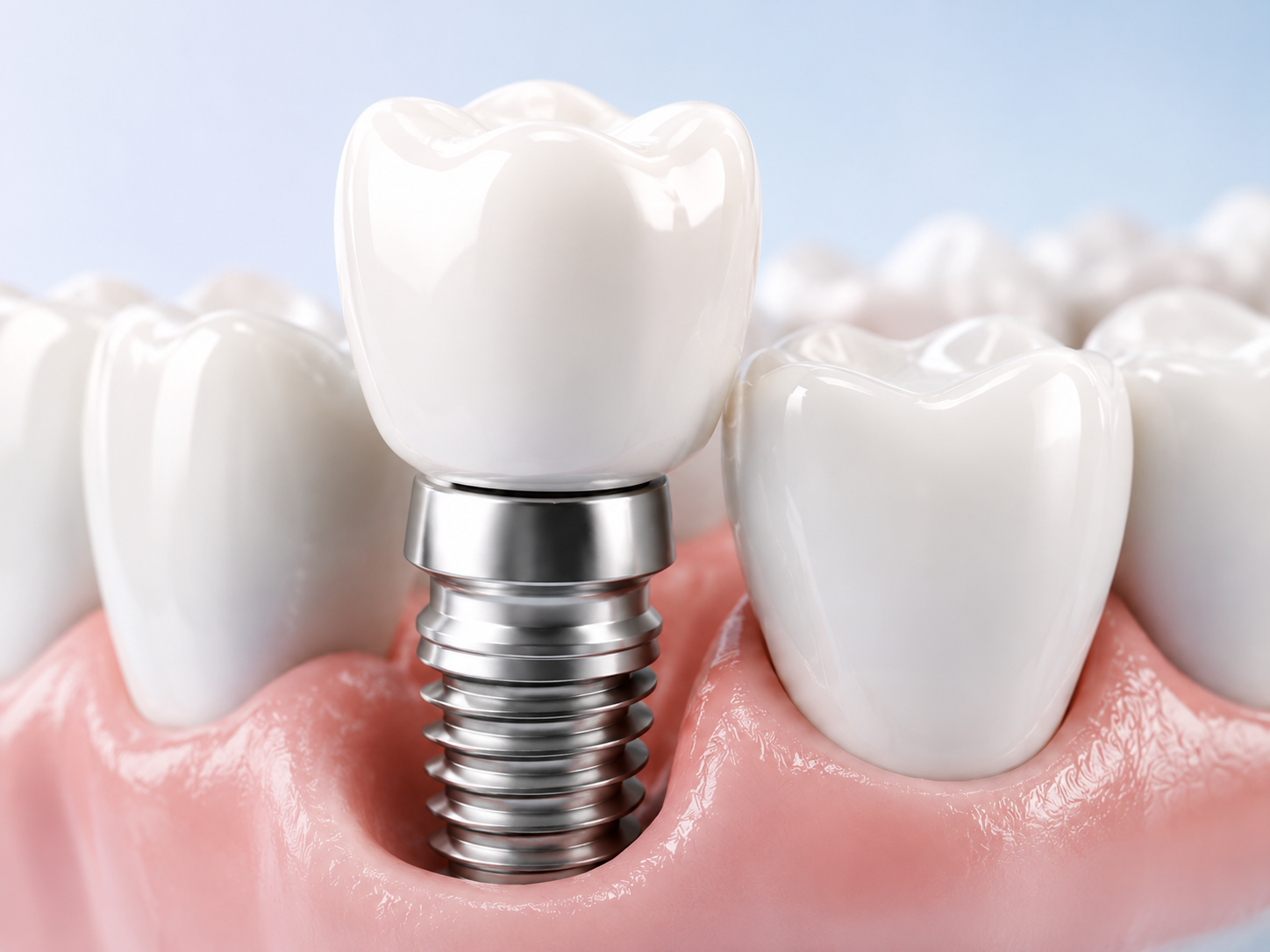 Implantology
Titanium implants that replace both the tooth and its root, helping restore natural chewing while supporting the surrounding jawbone.
View details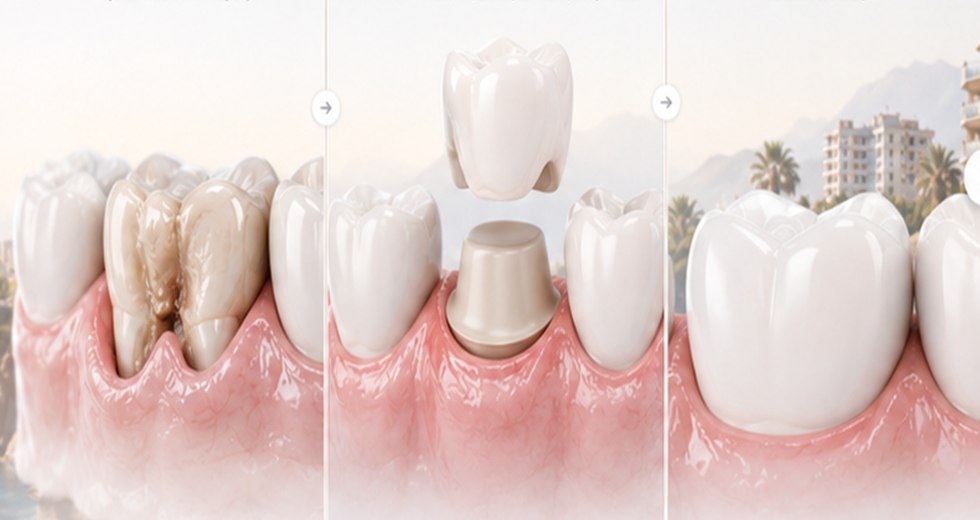 Aesthetic Dentistry
Custom-made zirconia crowns that cover, protect and restore damaged, worn or discoloured teeth while blending with your natural smile.
View details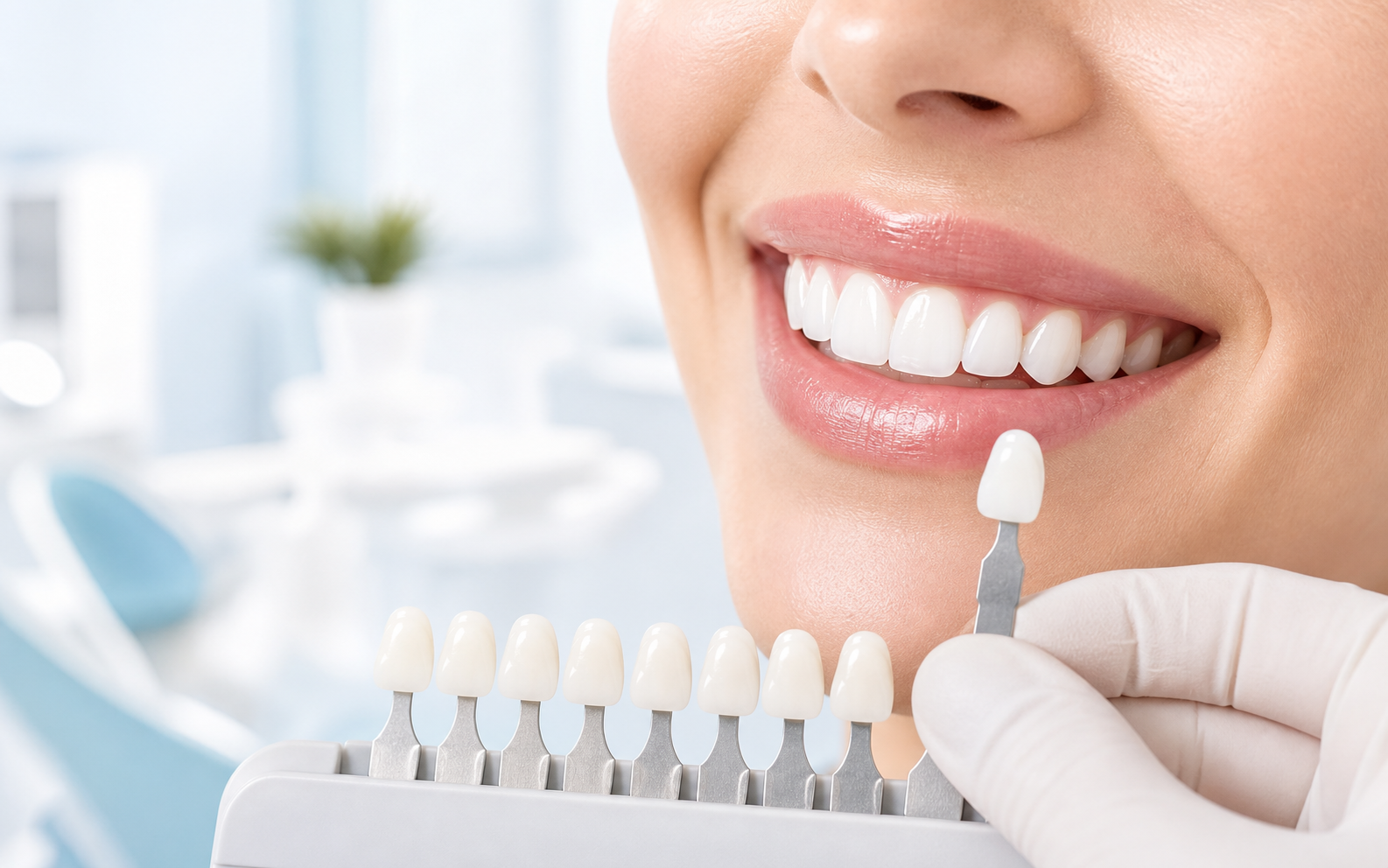 Aesthetic Dentistry
Thin, custom-made ceramic veneers that refine the colour, shape and symmetry of the front teeth while preserving healthy tooth structure.
View details