1
Online assessment and planning
You send dental photographs, medical information and a panoramic X-ray or CT scan where available, and the clinical team prepares a preliminary plan before travel.
A fixed full-arch restoration supported by four strategically positioned implants, replacing loose or failing teeth in one jaw.
Living with a full arch of missing, loose or failing teeth can affect far more than appearance. It can make eating difficult, reduce confidence and leave removable dentures feeling unstable or uncomfortable. All-on-4 dental implants are designed to support a fixed full-arch restoration using four strategically positioned implants. At Luxi Dent Center in Antalya, All-on-4 treatment is planned around bone volume, bite, smile line, gum condition and the long-term maintenance needs of each patient.
All-on-4 is a full-arch implant treatment in which four dental implants support a fixed bridge that replaces all teeth in the upper jaw, the lower jaw or both. The front implants are generally placed more vertically, while the back implants may be angled to make use of stronger available bone and avoid important anatomical structures. At Luxi Dent Center, full-arch implant treatment is carried out with Osstem implant systems, selected for their documented clinical track record and the worldwide availability of components. This approach can sometimes reduce the need for bone grafting, but it does not eliminate grafting in every case. A complete treatment usually includes four implants placed in one jaw, a fixed temporary bridge where immediate loading is clinically suitable, a healing period while the implants integrate with the bone, and a final full-arch bridge fitted after healing. The term All-on-4 describes the implant concept rather than one universal material or identical smile design, so the bridge shape, tooth shade, gum contour and final material should be selected according to the individual case.
All-on-4 may be considered for patients who have lost most or all teeth in one or both jaws, who have multiple teeth that cannot be restored predictably, who struggle with loose or painful removable dentures, or who want a fixed full-arch alternative to a removable denture. It may also suit patients who have experienced bone loss that makes one implant per tooth impractical, or who need a coordinated full-jaw treatment rather than separate crowns and implants. The treatment is not automatically appropriate simply because many teeth are missing: the clinical team must assess whether any teeth can or should be preserved, whether four implants provide sufficient support, and whether another option such as All-on-6, a removable implant-supported denture or conventional implant treatment may be more suitable.
Compared with a traditional removable denture, an All-on-4 bridge is secured to dental implants rather than resting mainly on the gums. It is not removed by the patient for daily use and is designed to remain fixed during eating and speaking, whereas a denture is taken out for cleaning and often at night and may move depending on fit and bone changes. A fixed bridge requires special cleaning underneath it, while a denture is cleaned outside the mouth, and All-on-4 requires implant surgery where a conventional denture usually does not. Both need long-term care: the fixed bridge requires professional reviews and component maintenance, while dentures may need relining or replacement as the jaw changes. A fixed restoration can feel more secure, but it should not be presented as maintenance-free. All-on-4 and All-on-6 both support a fixed full-arch restoration, and the main difference is the number and distribution of implants. All-on-4 uses four implants per arch and may work with reduced bone in selected cases, while All-on-6 uses six and usually requires suitable bone for the two additional implants, distributing load more widely. Neither option is automatically better: four implants can be entirely appropriate where anatomy or bone limits placement, and more implants do not automatically mean a better result. The decision should be based on anatomy, bone quality, bite, restoration design and long-term prognosis rather than on the higher implant number.
In selected cases, a fixed temporary bridge can be fitted shortly after implant placement, an approach commonly described as same-day teeth, teeth in a day or immediate loading. Same-day teeth do not usually mean that the final permanent bridge is completed on the day of surgery: the first bridge is temporary and designed to protect appearance and function during healing, while the final bridge is produced after the implants have integrated and the gums have stabilised. Immediate loading depends on implant stability, bone quality, bite forces and the ability to protect the temporary bridge during healing, and if these conditions are not met a removable temporary restoration or delayed loading may be safer. Temporary and final bridges serve different purposes, with temporary restorations prioritising healing, function and protection during osseointegration, and the final bridge selected for long-term strength, hygiene and appearance. Possible final materials may include acrylic-composite, reinforced polymer, zirconia or layered ceramic options, chosen according to bite forces, opposing teeth, available space, aesthetic expectations and maintenance needs. A highly polished, bright material is not automatically the best choice for every patient, and the bridge should be designed to allow cleaning access, support the lips appropriately and avoid an artificial or oversized appearance.
Swelling, bruising, tenderness and mild bleeding can occur during the first days after surgery, and medication, cold compresses and a soft-food plan are usually provided according to the case. During early healing it is important to follow the prescribed medication and hygiene instructions, eat soft foods and avoid placing excessive force on the temporary bridge, avoid smoking and alcohol because they can interfere with healing, avoid biting very hard or sticky foods with the temporary teeth, and contact the clinic if swelling, bleeding, pain or bridge movement increases. Long-term care includes brushing, cleaning beneath the bridge with suitable interdental tools or a water flosser where recommended, and regular professional reviews, as the implants, bridge screws and restorative material may require maintenance over time. Planning is spread across two visits: online assessment and preliminary planning before travel, a first visit of approximately five to seven days in Antalya for examination, surgery and temporary teeth, a healing period of typically three to six months at home, and a second visit of approximately five to seven days for the final bridge. The exact duration depends on extractions, bone procedures, healing, temporary restoration design and the laboratory stages required, and complex cases may need a longer stay or an adjusted visit plan.
The cost of All-on-4 depends on whether treatment is required for one or both jaws, the implant system, the temporary and final bridge materials, the number of extractions and whether bone grafting or other procedures are needed. Patients comparing full arch dental implants or full mouth dental implants abroad should check exactly what each quotation includes, because a lower headline price may exclude the final bridge, temporary teeth, extractions, anaesthesia, scans, medication, hotel or transfers. Luxi Dent Center can prepare an itemised preliminary quote after reviewing your dental images and medical information, with the final plan and price confirmed after clinical examination and 3D imaging in Antalya. International patients should also ask for written confirmation of the implant system, temporary and final materials, included services, aftercare plan and what support is available after returning home. Where confirmed by the clinic, travel coordination may include appointment planning, airport transfer and hotel assistance, and these services should be listed separately from the clinical treatment itself.
You send dental photographs, medical information and a panoramic X-ray or CT scan where available, and the clinical team prepares a preliminary plan before travel.
In Antalya, the teeth, gums, bite and bone are examined, and a CBCT scan may be used to plan implant positions and identify nerves, sinuses and areas of bone loss.
Teeth with a poor prognosis are removed where required, and four implants are placed in the planned positions under anaesthesia.
If sufficient implant stability is achieved, a fixed temporary bridge may be fitted, and where immediate loading is not appropriate another temporary solution is discussed.
The implants integrate with the bone over approximately three to six months, during which the temporary bridge is used carefully and hygiene instructions must be followed.
You return to Antalya for impressions or digital scans, try-in stages, bite adjustments and fitting of the permanent full-arch bridge.
One All-on-4 bridge replaces a full arch of teeth. The visible bridge may include around 10 to 14 teeth depending on anatomy, bite and restoration design.
A fixed temporary bridge may be fitted when implant stability and bone conditions allow immediate loading. This is not guaranteed in every case, and it is not the final permanent bridge.
Surgery is performed with anaesthesia, so patients generally do not feel pain during implant placement. Swelling and tenderness during the first days are expected and managed according to the clinical plan.
It may be possible in selected cases because angled implants can use available bone more efficiently. A CBCT scan and clinical assessment are required to determine whether grafting or another treatment is needed.
A typical plan may involve around five to seven days for the first visit and five to seven days for the final bridge visit after healing. The exact schedule must be confirmed for the individual case.
Osseointegration commonly takes around three to six months, depending on the jaw, bone quality, general health and whether additional procedures were performed.
The temporary bridge provides function, but a soft-food plan is essential during healing. Hard, sticky and high-force foods can overload the implants or damage the temporary restoration.
Cleaning usually involves brushing, interdental brushes, floss designed for bridges or a water flosser where recommended. The clinical team should demonstrate a routine suited to your bridge design.
Neither is automatically better. The appropriate number of implants depends on bone, anatomy, bite, restoration design and long-term support requirements.
You should contact Luxi Dent Center for a remote review and seek local dental care if urgent examination is needed. Treatment records and implant documentation are provided for continuity of care.
Communication, appointment planning and process follow-up are provided in Turkish, English, German and Russian. We also share guidance on airport–hotel–clinic transfers and accommodation.
A preliminary assessment can be made from your dental photos and panoramic X-ray if available; the definitive treatment plan is finalized after a clinical examination.
The duration varies by procedure type and individual case; a personalized treatment and accommodation schedule is shared during the initial consultation.
Let's build your personalized treatment plan together with our expert team.
Other Treatments
Explore other treatments that may be right for you.
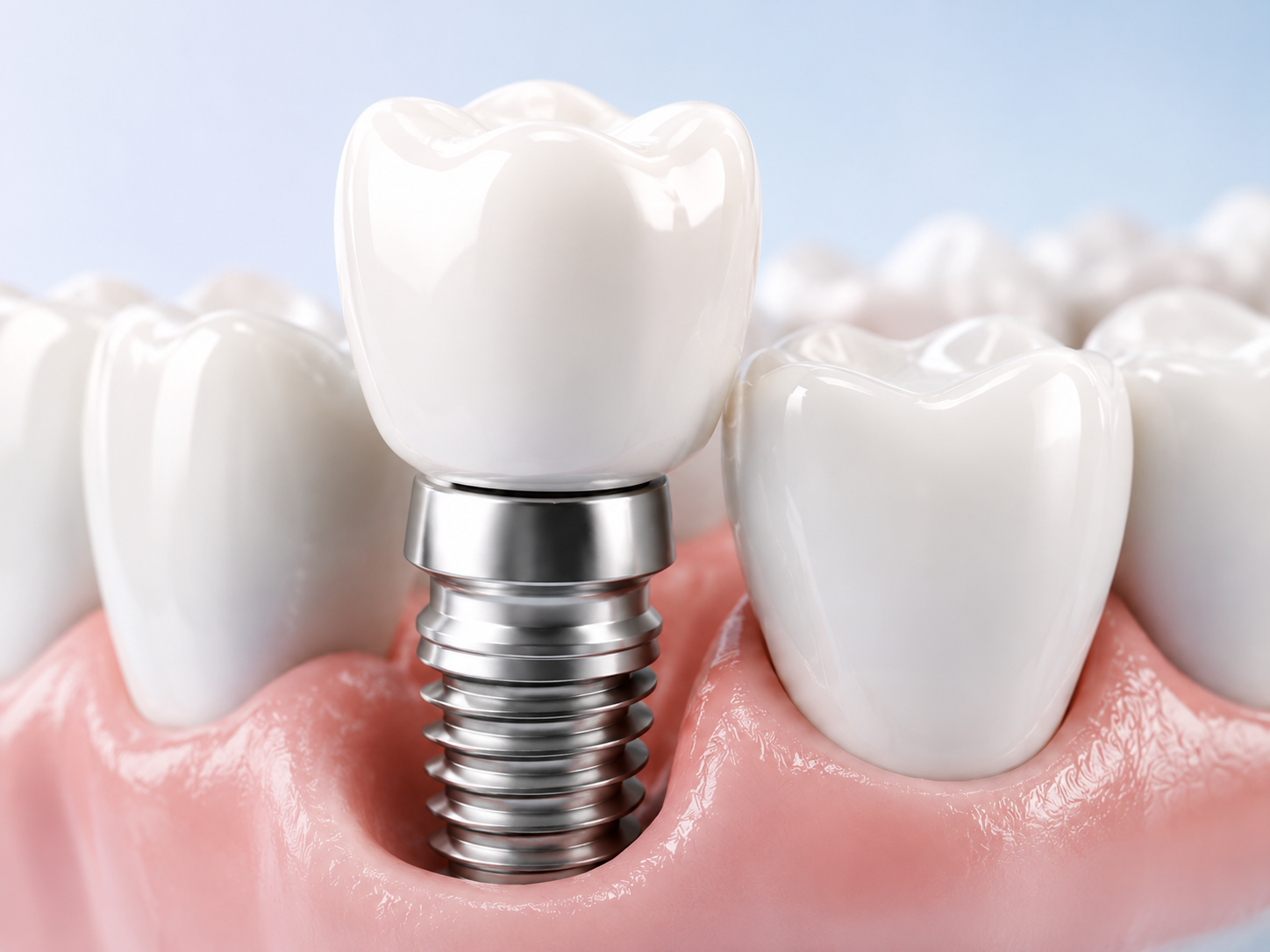 Implantology
Titanium implants that replace both the tooth and its root, helping restore natural chewing while supporting the surrounding jawbone.
View details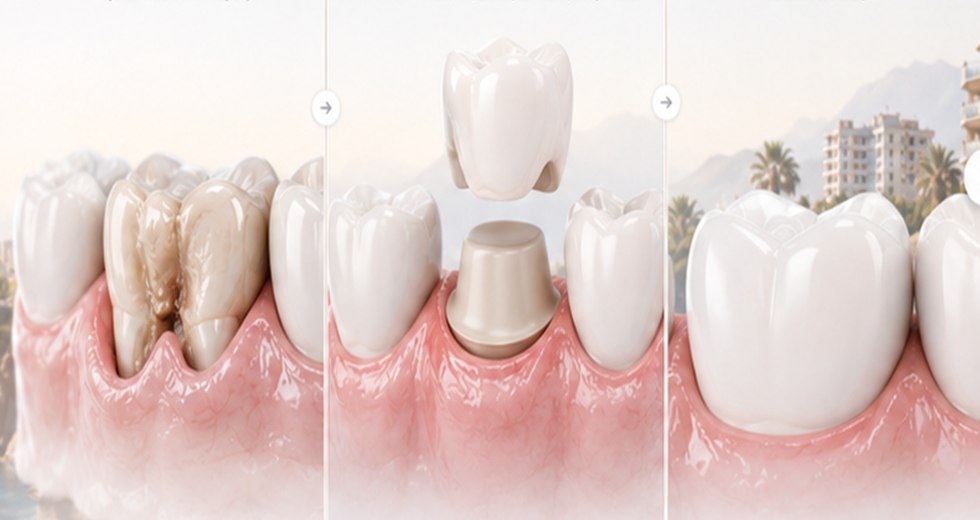 Aesthetic Dentistry
Custom-made zirconia crowns that cover, protect and restore damaged, worn or discoloured teeth while blending with your natural smile.
View details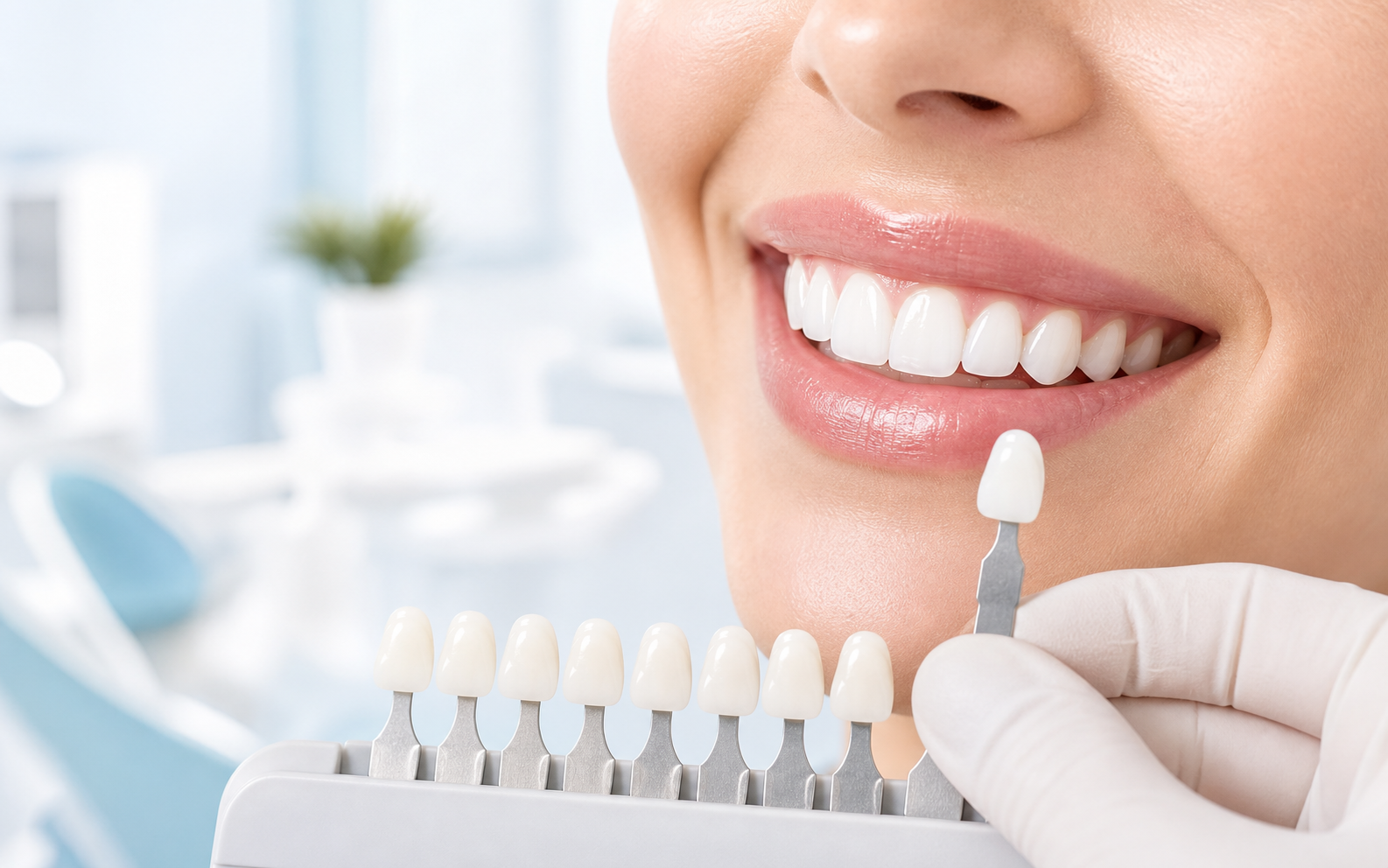 Aesthetic Dentistry
Thin, custom-made ceramic veneers that refine the colour, shape and symmetry of the front teeth while preserving healthy tooth structure.
View details